Roth Conversion Analysis
Turn future taxes into a planning opportunity.
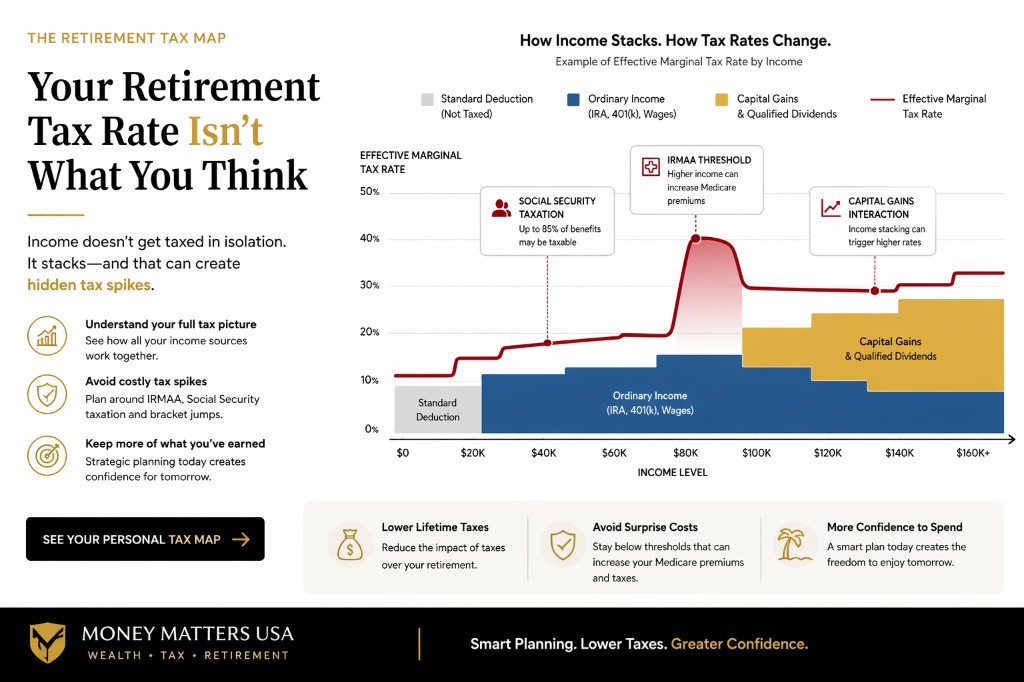
Most people don’t realize this: Your tax rate in retirement isn’t fixed. It depends on how and when you withdraw your money. Without a strategy, taxes can quietly increase over time.
The problem
- Higher taxes on IRA withdrawals
- Taxation of Social Security benefits
- Increased Medicare premiums (IRMAA)
- Larger required minimum distributions later
- State income taxes increase breakeven
The opportunity
A Roth conversion strategy allows you to take control of your tax situation — before it becomes a problem.
- Spread taxes more efficiently
- Reduce future tax exposure
- Create tax-free income
- Gain more flexibility in retirement
What we provide
- Clear comparison of strategies
- Year-by-year opportunity analysis
- Identification of hidden tax triggers
- Simple, actionable recommendations
What this means for you
- Potentially lower lifetime taxes
- More control over your income
- Reduced risk of tax surprises
- Greater confidence in your retirement plan
How it works
- Share a few key details
- We build your analysis
- You review your options
- You decide what makes sense
Tools & resources
Use our step-by-step flowchart to walk income, bracket room, timeline, and goals before committing to a conversion amount. Our Roth IRA analysis tool projects balances year by year, estimates breakeven, caps conversions to the top of a target bracket, and models RMD schedules — with print-ready output for client meetings.
For illustrative and educational purposes only. This analysis is not tax or legal advice. Consult your tax advisor for applicability in your situation.